
VivaTech 2026: “The magic is over, time for ROI”, the perspective of Nash Hughes, PGE 2001


VivaTech Ambassador and artificial intelligence expert Nash Hughes, a graduate of GEM, looks back on the key trends of the event and shares his unfiltered analysis of an ecosystem in the midst of transformation.
You attended VivaTech this year as an ambassador. What did your role involve in practice?
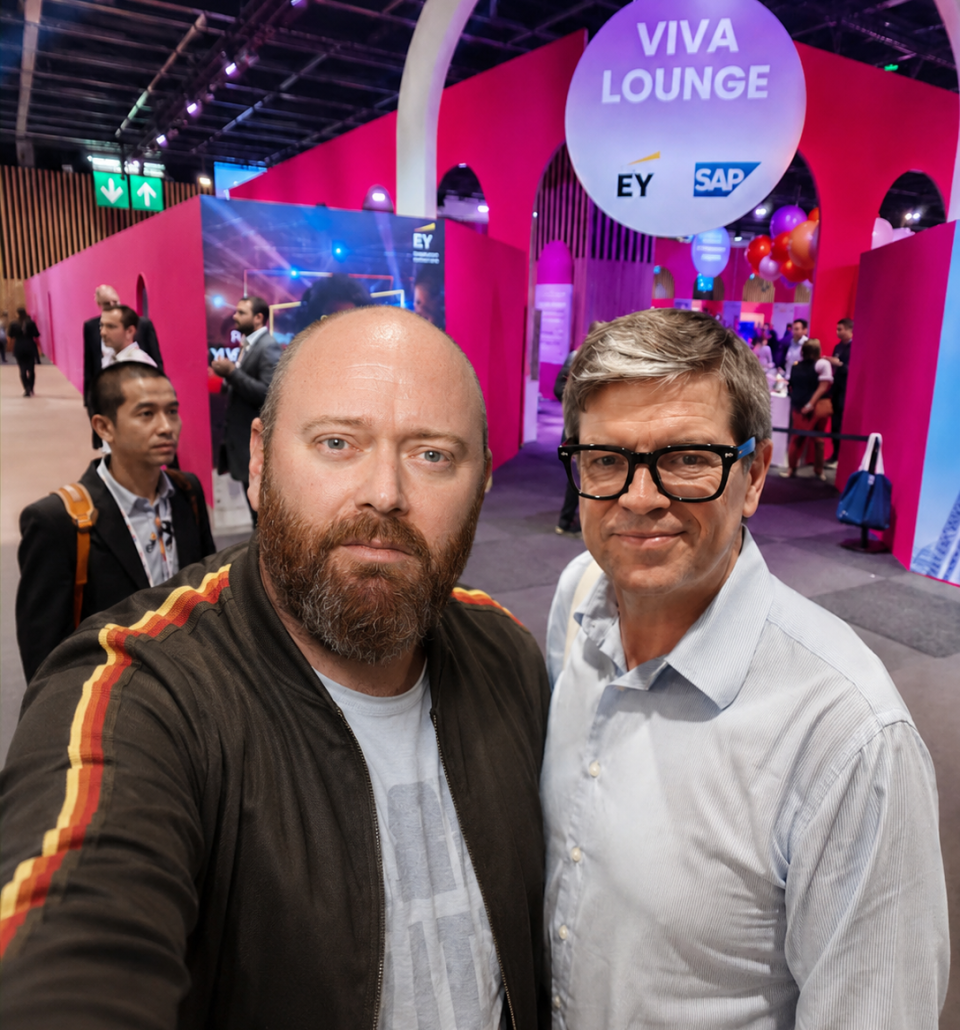
For me, being an ambassador isn’t about running a booth. It’s about relaying the event to my community. I support executives and C-level leaders on AI topics through AI x LEADERS, so my role is to confront them with reality—not slides.
That involves editorial content—LinkedIn, my newsletter The Ugly Truth—real-time analysis, and some promotion. But the real point lies elsewhere: translating the noise of the exhibition into meaningful signals for decision-makers who don’t have three days to spend wandering the aisles.
What moment or innovation particularly stood out to you?
The Unitree × HABS demo. A humanoid robot controlled by brain activity via an EEG headset, rather than by voice.
Beyond the “wow” effect, it’s highly symbolic of what we’re experiencing today: we’ve moved from gadgets to interfaces. For thirty years, we taught machines to think like us. Now, we control them with our thoughts.
More broadly, I’m very interested in what’s known as “physical AI”—AI embedded in robots.
In your view, what was the major turning point of this edition?
The shift in companies’ mindset. After three years of fascination with large models (OpenAI, Google, Anthropic…), followed by the rise of copilots and agents, they are finally demanding results.
And that’s excellent news.
It doesn’t mean they all fully master AI—far from it. But they’ve understood they can no longer ignore it. We’re clearly moving from spectacle to proof. The magic is over—time for ROI.
That’s exactly the message I’ve been delivering for the past two years: smart adoption of AI leads to fast, measurable results.
What major AI trends did you observe?
I see four very clear underlying trends:
Agentic AI: agents capable of planning, deciding, and acting autonomously are everywhere. The question is no longer “does it work?” but “how do I govern it?”
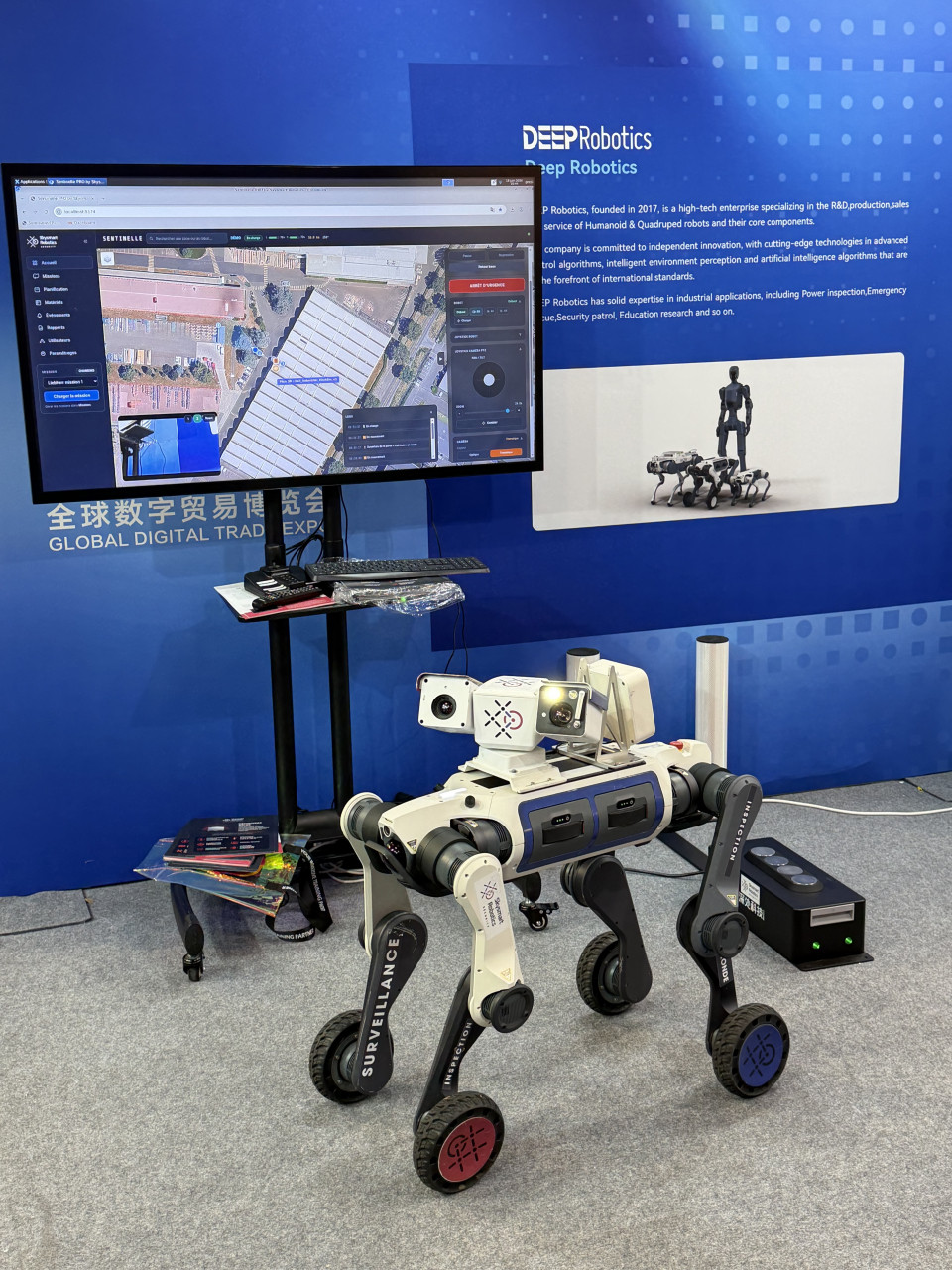
Physical AI: far more robots than in previous years—and above all, useful ones. Robotics is becoming industrialized, robust, autonomous. AI is becoming mobile and tangible. Between industrial robots, drones, and exoskeletons, it’s both fascinating… and sometimes a bit unsettling.
Digital sovereignty: massive investment plans are being announced, but reality is more complex. Europe still largely depends on non-European infrastructures, technologies, and capital. We lack large-scale infrastructure, we don’t have our own GPUs, our frontier models are limited to Mistral and a few others, and even funding is not fully European. Recent incidents—such as the abrupt shutdown of Claude Fable 5 by Anthropic at the request of the Pentagon—highlight this dependence. Sovereignty is widely discussed, but still largely to be built.
Convergence between AI and quantum computing, alongside major scientific debates. Some figures, like Yann LeCun, challenge the limits of current models. According to them, text-based AI (like ChatGPT) does not truly “understand” the world—it predicts words but doesn’t reason or plan like a human.
The future direction may lie in “world models”: AI systems capable of learning by observing the world, rather than relying solely on probabilistic approaches..
Was there a startup or innovation that particularly impressed you?
Honestly, no—not because there aren’t any, but because there are too many.
The spectrum is huge, from small anecdotal innovations to major breakthroughs, particularly in healthcare. It’s hard to choose.
That said, quantum computing fascinates me. I clearly understand what it’s used for… but not at all how it works! And I love that—it forces me to learn and challenge myself.
How do you see AI evolving in your field over the next few years?
My job is solving problems. And today, 90% of those problems can be addressed with AI.
But the advantage won’t lie with AI alone, nor necessarily with younger generations. It will go to experienced profiles who know how to combine domain expertise with mastery of tools.
AI will automate the entire execution layer: producing, summarizing, translating. What will gain value is what it cannot do: judgment, intuition shaped by experience, critical thinking, and the courage to say no when every indicator says yes.
We will also move from “prompt engineering” to “context engineering.” And above all, we’ll need curious, well-rounded individuals capable of asking the right questions.
Did you interact with any students or fellow GEM alumni on site?
Yes—and that’s often where the real VivaTech happens: in queues, informal conversations, afterwork events.
I spoke in particular with audiovisual students who are deeply concerned about their future. They oscillate between fascination and questioning.
What I take away is that we absolutely need to move out of denial. AI will transform jobs—that’s a reality. And we must prepare younger generations for it.
Schools must teach how to learn. Raw knowledge is no longer the key asset. The challenge is “lifelong learning by design.”
What advice would you give to GEM alumni who want to attend this kind of event??
Don’t come to see robots—come with questions.
If you’re only looking for the “wow” effect, you’ll waste your time. You need to prepare your visit and know what you want to understand.
Otherwise, it’s like going to the Cannes Film Festival without accreditation and hoping to run into celebrities—it never happens.
And don’t neglect the conferences. The level of speakers is exceptional, and they’re often what leaves the biggest impression. For example, the founder of OpenClaw was fascinating!
Why is it important, in your opinion, to attend VivaTech?
Because you need to see what people are actually building—not just what the media says.
“Startup nation” isn’t a slogan—it’s entrepreneurs, investors, clients, people who work and create.
VivaTech isn’t CES—and that’s fine. It’s a strong European showcase, a key moment for the innovation ecosystem. And it’s also a major… French event. That’s something to be proud of.
What do you personally take away from this edition?
A somewhat unusual edition, with a heatwave and some logistical constraints—particularly official movements that slowed circulation.
But I was able to meet the people I wanted, explore the innovations that interested me, and attend several talks. So overall, a very positive experience… despite the heat!
To conclude, if you had to sum up VivaTech 2026 in three words?
Impact. Sovereignty. Human.
Impact, because the event increasingly highlights societal and environmental challenges, notably driven by Maurice Lévy and his incubator, the Escalator.
Sovereignty, because it’s a central—and still unresolved—issue.
Human, because ultimately, it’s the true driver of change: our ability to understand, adapt, and transform how we work and live.
 |  |

Comments0
Please log in to see or add a comment
Suggested Articles


