When the future becomes a testing ground: imagining to learn.

Who among you hasn’t experienced innovation in one way or another during your journey at GEM?
At GEM, innovation isn’t a buzzword — it’s a mindset. The school was one of the first in Europe to integrate Serious Games as a learning tool.
A true visionary in pedagogy, Hélène Michel professor at G EM, has been exploring the potential of games and Design Fiction for over a decade to imagine possible futures.
What is Design Fiction?
Design Fiction is an immersive approach that uses the codes of science fiction to imagine future scenarios and make them tangible.
In practice, it involves creating fictional artifacts (objects, services, situations) to question the present, anticipate disruptions, and spark creativity.
It’s a way of learning through experimentation — without risk — by exploring radical ideas to inspire real solutions.
“We don’t teach the future. We learn how to design it, prepare for it, question it, and even make it tangible.”
— Hélène Michel
From campus to companies: Design Fiction as a new lever for innovation
This approach goes beyond the academic sphere and is integrated into Executive Education programs to help companies anticipate disruptions and co-build resilient strategies.
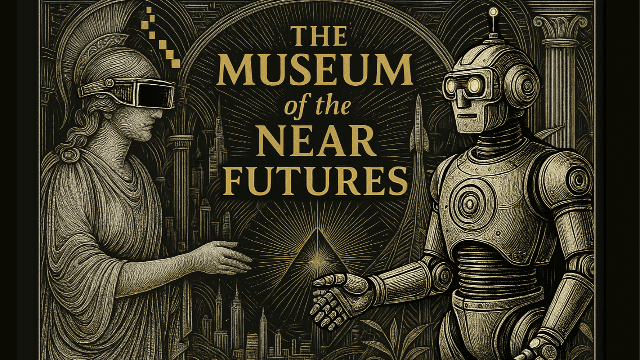
Recently, GEM opened its Museum of Near Futures: an immersive space based on the Design Fiction method that allows our students — and now our partners — to design and test possible futures with critical thinking, creativity, and a sense of collaboration.

International recognition
The Museum of Near Futures project of GEM won the Silver Award in Business Education during Reimagine Education Conference. Design fiction is considered as a powerful tool to imagine preferable futures.
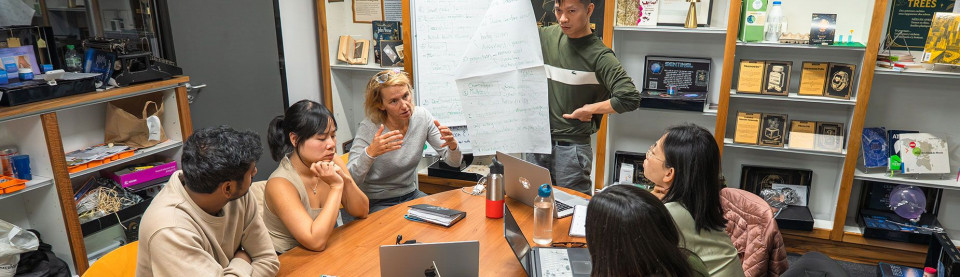
Concrete Example 1: BeeAlp
Grenoble-based companies like BeeAlp have collaborated with GEM to imagine future technologies.
During a workshop led by Hélène Michel, BeeAlp designed an ethical and sustainable smartphone.
“What if our future technologies were designed not for performance but for durability? Beyond the experimentation that fosters real reflection, we appreciated drawing concrete lessons to feed our future innovation projects!”
— Olivier Dufour, Co-founder of BeeAlp
Concrete Example 2: IKEA
In a workshop inspired by the IKEA catalog, participants imagined connected furniture of the future:
- A sofa capable of measuring your stress level and suggesting breathing exercises,
- A table that automatically adjusts its height to promote ergonomic posture,
- ...
These fictional scenarios help question our current habits and anticipate technological and societal impacts.

The Museum of Near Futures enables you to:
- Anticipate changes and strengthen strategic resilience
- Stimulate creativity and organizational agility
- Co-create disruptive concepts with GEM experts and students
- Enhance your employer brand through innovative and responsible approaches
What do you think?
Would you be interested in discovering this innovation?
Read the article published in EXPRESS Education (in french).

Comments0
Please log in to see or add a comment
Suggested Articles